



It is the centenary of the start of one of the longest and bloodiest battles in human history. The ten-month-long, relentless Franco-German conflict claimed between 650,000 and 750,000 lives, including those killed, missing and wounded.

When planning the battle, the Germans deliberately chose the Verdun area. The town was an unquestionable symbol of France’s history and pride. Capturing it could have dealt a devastating blow to the fighting spirit of the French army. Furthermore, in the summer of 1915, some of the fortress’s defences had been stripped of their armaments (mainly artillery), which had been redeployed to other sections of the front. The garrisons of the forts had also been reduced. If the front line were breached at this point, the road to Paris would lie open to the Germans. The French, on the other hand, would lose their base for a counter-offensive and access to the enemy’s rear.

From January 1916, the Germans had been making intensive preparations for an attack – in accordance with the plan presented by the Chief of the General Staff, General Erich von Falkenhayn. Over 1,200 guns of various calibres, including the heaviest 420 mm mortars, were concentrated on a relatively short section of the front, and 2.5 million shells were prepared. The 5th Army, commanded by the Prussian Crown Prince, was to break through the French defensive lines on the right bank of the Meuse.
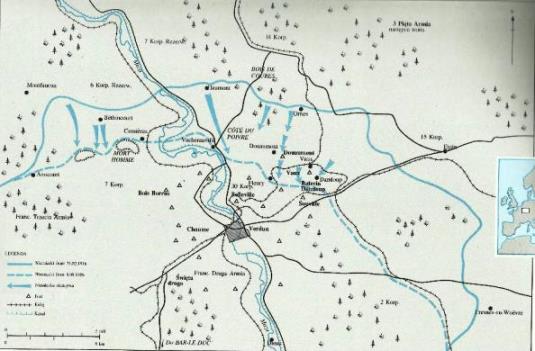
Map source: A. Livesey, The Great Battles of the First World War. Warsaw, 1998
On the morning of 21 February 1916, a barrage of artillery fire lasting several hours marked the start of Operation ‘Gericht’, which was more than a week behind schedule. The Germans’ bold attacks met with heroic resistance from the French, leading to these clashes being dubbed – not without reason – the ‘meat grinder’ by later generations. On 25 February, one of the most important strongholds of French resistance – Fort Douaumont – fell. This was a wake-up call. On the same day, General Ph. Pétain took command of all defensive operations. New divisions, combat equipment and ammunition were hastily brought to Verdun via the so-called ‘sacred road’. By the end of February, the German offensive had been halted. The following month, the Germans also reinforced their troops, which led to a balance of power. Over the next few weeks, a classic war of attrition, in which no means were spared, raged on. Its toll on the Kaiser’s soldiers was devastating – at the cost of 200,000 killed and wounded, they had advanced 7 km into French positions.
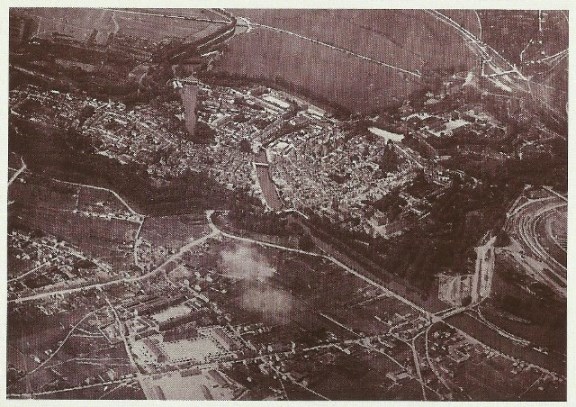
The pride of France – Verdun-sur-Meuse, still untouched by the ravages of war.
On 7 June, another of the forts fell – Fort Vaux. Its defenders, buried under a barrage of fire (an estimated 10,000 shells a day), gassed and scorched by flamethrowers, surrendered after a week of heroic resistance.
At the end of June, the Allied offensive on the Somme, which had been planned for months, began. The Germans were forced to redeploy a significant portion of their troops and heavy artillery there, which meant they switched to defensive operations near Verdun. They still attempted to capture Fort Souville, but its swift and well-organised defence thwarted German plans.
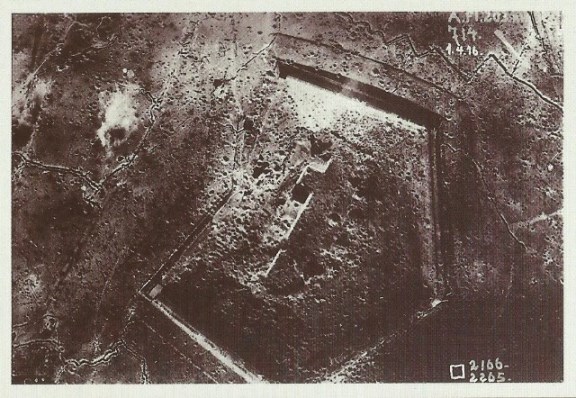
The Legend of Verdun. Fort Douaumont – 1 April 1916
The Germans’ weakened state handed the initiative to the French, who launched powerful counter-attacks in the autumn of 1916. These succeeded in driving the Germans back to the positions they had held at the start of the year.
Ten months of fighting brought no territorial gains to either side, and the material (and above all human) losses were unimaginable. The 210 km² battlefield still conceals countless artefacts from a century ago – the ground here is soaked with the blood of hundreds of thousands of soldiers, and at every turn one can see the scars left by the 37 million shells fired by French and German artillery – that bloodthirsty ‘queen of the battlefields’ .
Text and photographs: T. Blachura
The archive photographs are taken from the folder ‘Verdun… Photographs by Edmund Malicki’. An exhibition of photographs from the collection of Fernanda and Bożena Malicki was organised in spring 2001 by the Teatr Cultural Centre in Grudziądz.
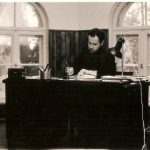
Edmund Malicki, born in 1891, was forcibly conscripted into the Prussian army. In early 1915, he was sent to France to the Verdun area, where (due to his professional interests) he served as a photographer in the observation balloon unit (Feldluft Abt. No. 4, 1st Company). Suspended in the gondola of a tethered balloon, he photographed the areas around Verdun, Flabas, Ornes and Gremilly whilst under fire.