



(General Pierre Cambronne)
In the spring of 1814, Napoleon Bonaparte was forced by the coalition forces to abdicate and go into exile on the island of Elba. At Versailles, the victors began negotiations intended to establish a new order in Europe for the next hundred years.
A year later, however, the ‘little corporal’ returned to Paris, sowing panic whilst simultaneously mobilising the European thrones to take vigorous action in accordance with the Latin maxim: ‘Lucifer (Napoleon) ante portas!’

The Battle of Waterloo – etching by François Louis Couché the Younger (1782–1849) (collection of the University of Zielona Góra Library)
A military clash was inevitable – yet the resurgent imperial army was far weaker than the coalition forces. Napoleon’s plan was (in the first stage) to defeat the enemy’s armies one by one before they could join forces.
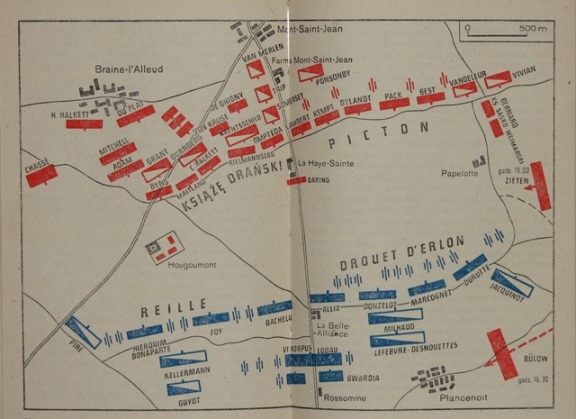
Map of the Battle of Waterloo (source: T. Malarski, Waterloo 1815, Warsaw 1984)
On Sunday 18 June 1815 (following earlier skirmishes at Ligny and Quatre Bras), 73,000 French troops faced off at Waterloo against 68,000 British troops under the Duke of Wellington and 60,000 Prussian troops under Field Marshal von Blücher. The bloody battle, which lasted from midday until late evening, ultimately ended in Napoleon’s defeat, though there was a time when he could have emerged victorious from the battle (the decisive factors were an underestimation of the enemy – particularly the Prussians, errors in command, poor timing, and the inept leadership of Marshal Ney, ‘the most loyal of the loyal’).
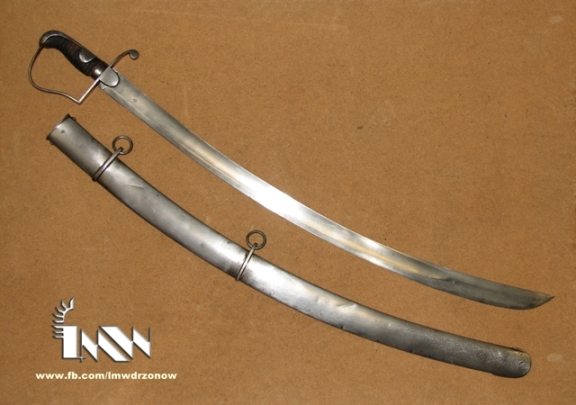
An English light cavalry sabre, model 1796, used by, among others, the Polish light cavalry of Napoleon’s Imperial Guard (collection of Paweł Komorowski)
The toll of one of the most significant battles in human history was 41,000 French soldiers killed, wounded, missing or taken prisoner, and 24,000 British and Prussian soldiers killed, wounded or missing. The Emperor was forced to abdicate a second time and was exiled to the island of Saint Helena, where he ended his turbulent life in 1821. An era came to an end, and the legend of the ‘little corporal’ began, a legend that continues to this day.
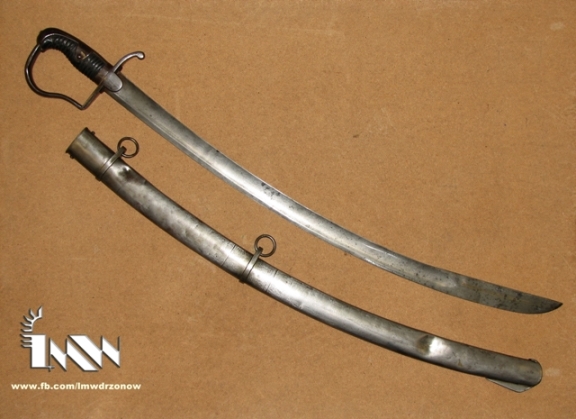
The Prussian sabre, model 1811, known as the Blüchersäbel – the prototype for a series of sabre designs used in the Prussian and German armies until the Second World War (collection of Paweł Komorowski)
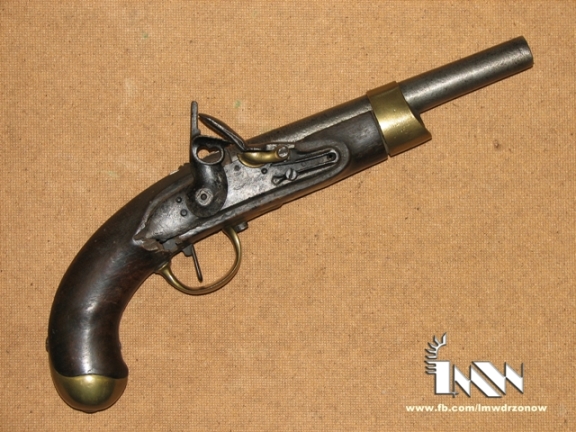
French cavalry flintlock pistol, AN XIII, Manufacture de St. Etienne?, 1813 (collection of the Lubuskie Military Museum, LMW-KI-1961)
Text and photographs: T. Blachura