




If one were to analyse each era from a long-term perspective, it could be divided into various stages. Of course, these would be merely arbitrary stages, understood as the passage of time marked by various events. Nothing happens suddenly, so every transformation is fluid in its own way, and recognising it and interpreting it correctly often requires the passage of tens or even hundreds of years.
Photo and text: Jarosław Sobociński
Observing the world as it develops so rapidly today, we get the impression that the more new technology comes into use, the more changes there are and the more frequent they become. However, this is merely an illusion. What we are currently observing is a process that will only be properly categorised many years from now, and the changes we notice are merely small fragments of a larger whole. It has always been this way; only human consciousness and perception change.
The Lubuskie Military Museum, having laid its foundations since 1978, was also subject to these principles. Such stages included, for example, the period of renovation and adaptation of the building to the museum’s needs, the gradual expansion of the exhibition area, and the step-by-step creation of the open-air collection. The official opening of the museum on 8 May 1985 also marked a specific stage in the creation of the whole. The 40 years of the museum’s existence since its official opening, which will be marked in 2025, are certainly too short a time to establish a comprehensive categorisation, but one can attempt to identify the more significant milestones.
During the Cold War, a time of confrontation between NATO and the Warsaw Pact, when the museum was being established within Poland’s socialist political system, the operation of a military museum was by no means easy or straightforward. A politically determined historical narrative prevailed, so the media message also had to be ‘properly’ directed. Most types of equipment and gear were classified or top secret, and even a historian or museum staff member enquiring about the specific technical or tactical capabilities of a tank, aircraft or missile to further their knowledge could be interpreted as an anti-state act, bordering on espionage. Consequently, the level of substantive knowledge regarding military equipment that was modern at the time was rather low. Today this seems somewhat embarrassing, but such were the times, and one must bear this in mind. All the more so because a similar level of security against information leaks behind the Iron Curtain was also applied in NATO countries.
What is important for a historian or enthusiast – the service history of, for example, an aircraft, the pilots who flew it, the tasks they carried out, or the technical details of its construction – was kept in the secret office of the relevant unit in flight logs and maintenance records, and after the equipment had been taken out of active service, these documents were destroyed. Consequently, in many cases of scholarly research today, it is difficult to find a reliable historical analysis, hence the errors and unconfirmed assumptions in publications.
Another issue was the process of acquiring equipment for the collections. On the one hand, military units assisted with the transport and even the assembly of exhibits on the premises; on the other, the acquisition itself was quite complicated. As a rule, the equipment handed over for museum purposes was incomplete, lacking many components (some of which were dismantled before being handed over to the Museum to provide spare parts for items still in use within the unit – with the mindset that ‘in the museum, nobody will need it anyway’). Military museums were generally treated as exhibitions of decommissioned, old equipment (i.e. Museum = old). No one in the military circles of our country at that time even considered donating ‘operational’ equipment to a museum; there was no such awareness, and no such need was seen. The educational value concerned only the external appearance of the equipment. Thus, the mere acquisition of a new exhibit for the collection was considered a success, regardless of its condition or technical completeness.
The situation in Poland began to change following the fall of communism and the transition to a new political system. These changes, however, were slow to take hold; after all, it is people, not paperwork, who change the world. Whilst the system had changed, habits and ways of thinking remained rooted in the old era and the previous system for a long time to come. The emerging business sector created opportunities to accumulate capital and utilise it in various ways. Among business owners, who were often also military enthusiasts, the idea arose of purchasing military equipment for their private collections. Initially, as before, only items in categories V and VI were considered – that is, those in a technical condition unsuitable for operational use. Over time, however, this situation changed, and exhibits capable of being displayed in motion also became available. This idea spread, albeit again at a painstakingly slow pace, to the museum sector as well. Admittedly, institutions of this kind have always been at the very bottom of the list for state budget subsidies, and maintaining exhibits—especially those in fully operational condition—consumes a great deal of funding; however, volunteers, soldiers previously trained on the relevant equipment, stepped in to help in this regard.
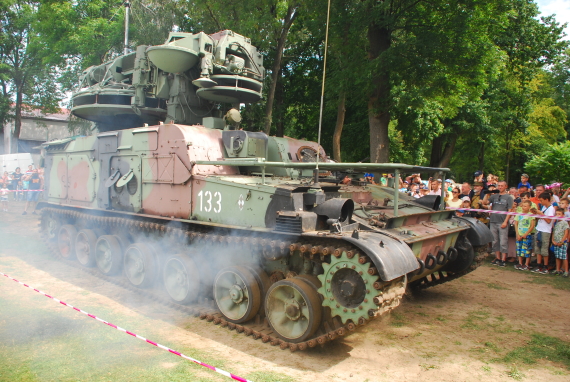
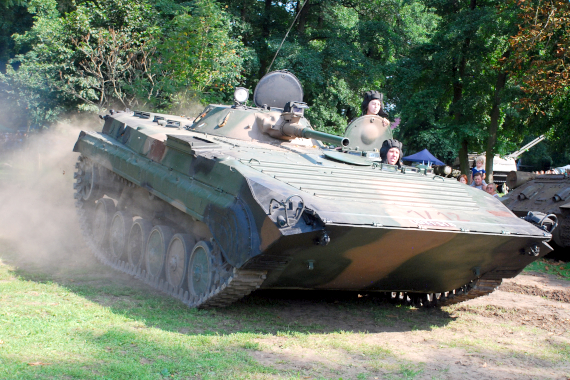
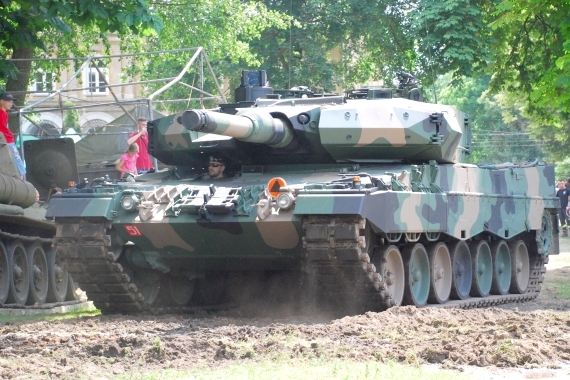
In many cases, it is thanks to their help and immense effort that visitors can enjoy the experience of seeing a tank, an armoured personnel carrier or a rocket launcher in action.
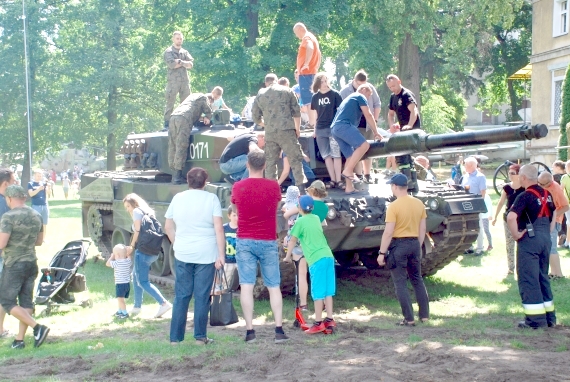
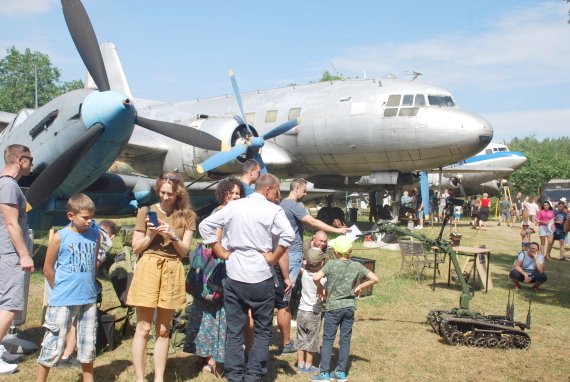
However, developing this aspect was a long process and evolved naturally. In the case of the Lubuskie Military Museum, the foundations for the now well-known and popular military picnics were laid by the then head of the advertising department, Ms Elżbieta Szyngiel. She was the one who came up with the idea of organising outdoor picnics. The first such events began to take place as early as 1999 at the beginning of June, to mark Children’s Day. On that day, the Drzonów museum organised outdoor games and competitions for children, as part of school or summer camp trips, but of course not only for them, but also for whole families with children. Visitors could climb into a T-55 tank and the cockpit of a MiG-21 aircraft. At that time, the interior of a Mi-4A helicopter was also open to the public. However, this display was discontinued due to the helicopter’s very delicate construction, which was not designed for mass visits to the interior, estimated at several thousand people a year.
Amid growing interest in regional tourism, having a large grassy area under the trees was a distinct advantage. During the June picnics, children took part in games and activities; they could play football or enter art competitions and win prizes. All this meant that the popularity of this event began to grow year on year. As Poland prepared to join the EU, from 2003 the museum began organising a picnic under the auspices of this initiative, entitled ‘Safe Holidays in the European Union’. Once again, the originator and main organiser was Ms Elżbieta Szyngiel. These festivals were enhanced by performances from various artistic groups on a large professional stage set up on the museum grounds, bathed in stage spotlights. These were complemented by a few souvenir stalls, military pea soup served by soldiers from a real field kitchen, and various competitions and games for the whole family. It was customary at the time to invite a different car manufacturer each year to showcase their vehicles. Subsequent editions of the picnics were also gradually enhanced with battle re-enactments.
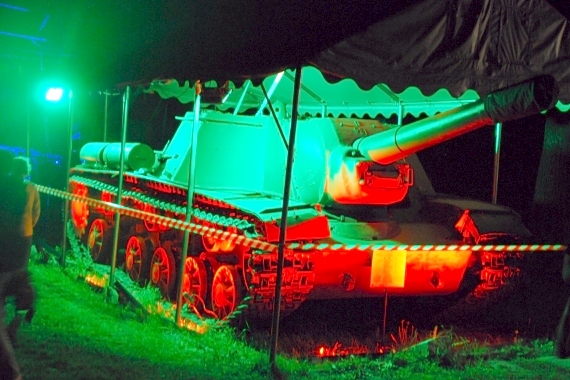
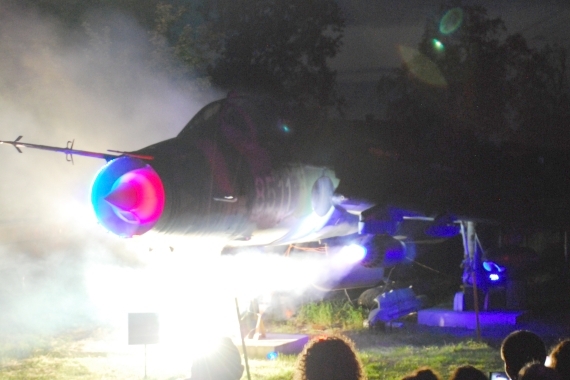
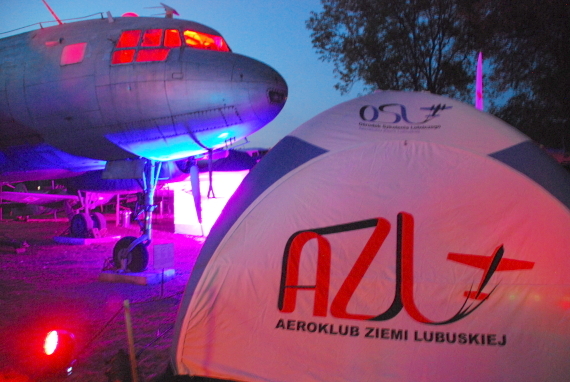
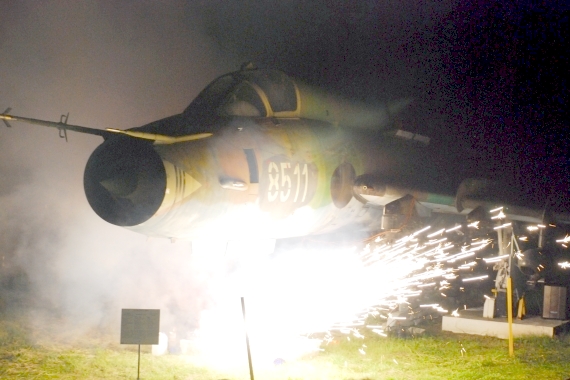
Since 2005, the Lubusz Military Museum has been organising another fascinating event in the form of a picnic. This was the European Night of Museums, to which the Drzonów branch was officially invited as the first of the Lubusz museums. It was, and still is, one of the most fascinating outdoor events, as experiencing historical exhibits in the open air, illuminated by multicoloured spotlights, alongside a night-time display of fire theatre, historical dances and knightly combat, makes an incredible impression, literally showing the museum in a different light. The whole event, complemented by market and souvenir stalls, has become a major attraction for visitors. A tradition and the much-anticipated finale of the night-time event is a light and pyrotechnic display of a selected exhibit, accompanied by background music and culminating in a fireworks display. The beginnings of this event, however, were rather modest and were limited to lighting the area with a few moving and a few fixed spotlights. Despite this, interest in the event was enormous from the very start and, in some years, exceeded the physical capacity to safely accommodate all visitors! Of all the European Museum Nights in Drzonów, the 2014 edition was one of the most beautiful, organised by the new director, Mr Piotr Dziedzic. During the event, it was not only the musical accompaniment and fireworks, but above all the stage laser show that left a colossal, unforgettable impression on all spectators. https://old.muzeum.drzonow.eu/index.php/noc-muzeow-2014-fotorelacja A presentation of this kind has taken place at the Drzonów museum only once so far.
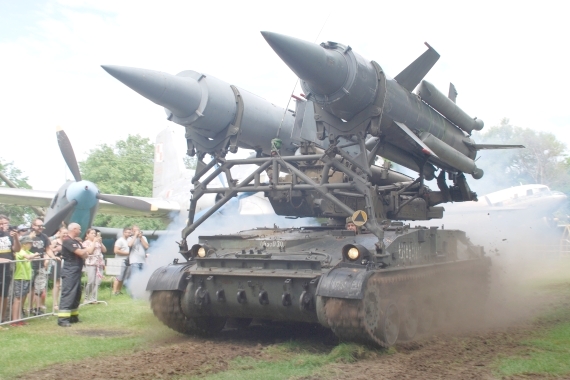
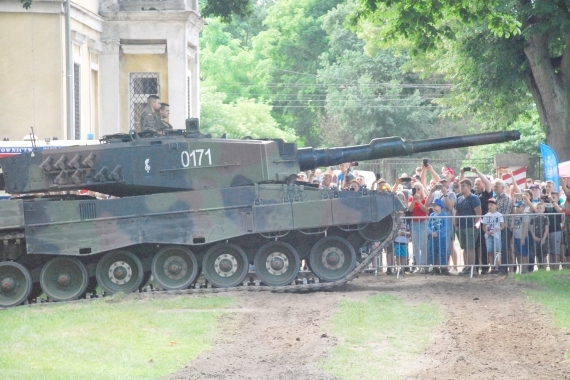
Progress in everyday activities is driven by their gradual evolution. This was also the case with the organisation of the Children’s Day picnic. The popularity of the Drzonów event led other institutions to start organising similar events, as a certain stagnation had crept into regional cultural initiatives at the turn of the 20th and 21st centuries. The proliferation of various Children’s Day events led to a duplication of activities, and consequently a decline in visitor numbers. Consequently, at the Drzonów Military Museum, the idea arose to postpone this outdoor event by two weeks and link it to the Tank Crewman’s Day celebrations, held on 16 June. This paved the way for what is now the museum’s flagship event, which has become famous in Poland for the large amount of military equipment displayed in motion. It is an excellent opportunity to strengthen the museum’s ties with other institutions and nearby military units, which, in line with current doctrine, are keen to showcase their equipment and gear. The first exhibit in motion was the BTR-152 armoured personnel carrier, restored to working order thanks to the efforts of Mr Krzysztof Motyl and cooperation with transport companies in Zielona Góra. It was later joined by the UAZ-469B off-road vehicle. The first large and heavy exhibits acquired for the museum in fully operational condition were the 2K11M1 ‘Krug’ system – the 1S32M1 radar and the 2P24M1 launcher, which were added to the museum’s collection following over nine months of efforts and direct personal supervision of the project by Mr Jarosław Sobociński, Head of the Aviation Department. Technical maintenance, repairs and demonstrations of this equipment during museum events were carried out by former soldiers of Unit JW2211, trained in Skwierzyna, where the equipment was originally operated. The most recent exhibit acquired from the LMW collection and restored to full working order is a T-72A tank, which was acquired thanks to Mr Błażej Mościpan, the chief inventory manager of the LMW collection. Its restoration and recommissioning were undertaken by an external company, whilst the care, ongoing on-site maintenance and presentation during museum events are handled by the soldiers who operated this equipment during their military service. A set of GSP-55 self-propelled ferries, already part of the museum’s collection, has also been restored to roadworthy condition. Due to the complexity of its design, the Su-22M4 aircraft has also been restored to only partial working order, involving the partial activation of its mechanical and avionics systems, as well as the cockpit lighting. These works were carried out thanks to the assistance and cooperation of the Piła Military Museum and technicians who worked on this type of aircraft during their service.
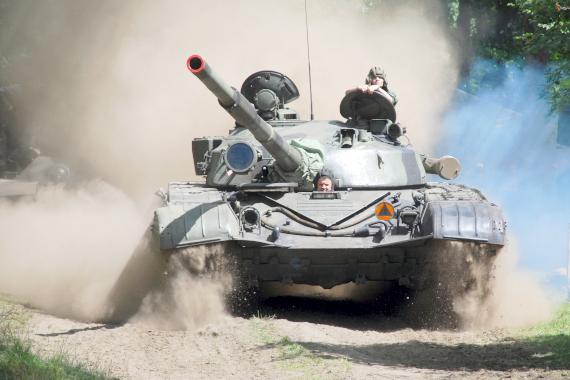
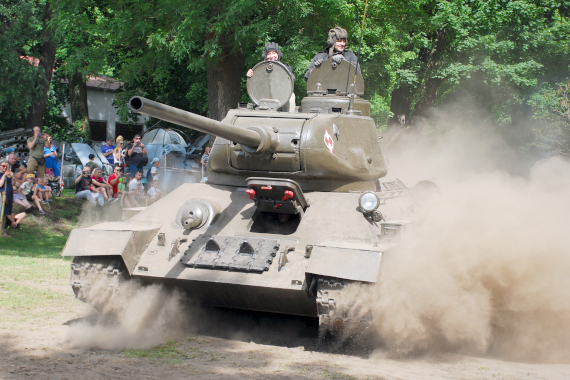
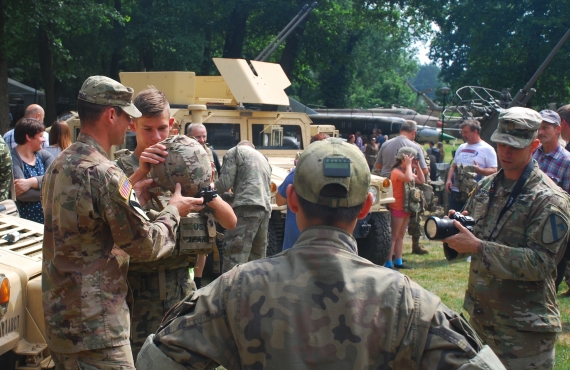
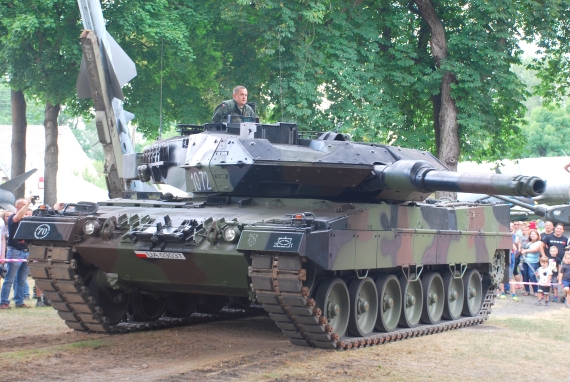
Every year, the Armoured Forces Day picnics are supported and made even more exciting by numerous military units with which the museum has maintained good relations for many years. Thanks to them, visitors to the Drzonów Military Museum can view the units’ equipment up close on this day – from the outside, from the inside, and also during dynamic demonstrations. As a result, museum visitors have already had the opportunity to see, amongst other things, tanks such as the Leopard 2A4, Leopard 2A5 and the latest Leopard 2PL, the ‘Krab’ self-propelled howitzer, the ‘Osa’ anti-aircraft missile launcher and many others. Ongoing cooperation with the Museum of Prisoner-of-War Camps in Żagań also results in frequent displays of the T-34/85 tank, a well-known and highly distinguished vehicle in our history. This picnic has not only become legendary but has also grown into a major event featuring additional attractions, re-enactment groups, a knights’ village, and a vast array of stalls and stands—so diverse that it is difficult to list them all without omitting something.
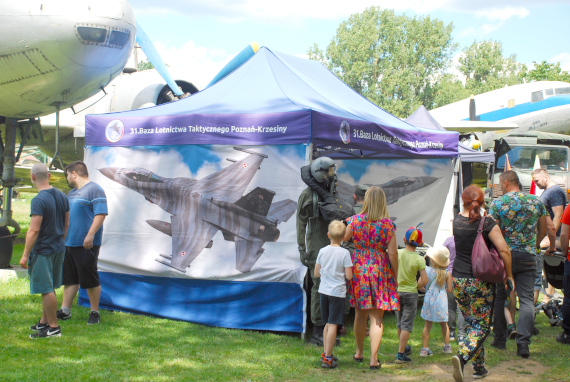
Another occasion for organising the picnic was the annual celebration on 15 August in honour of the Miracle on the Vistula, Polish Army Day. Riding the wave of popularity gained by Drzonów’s Night of Museums and the Tank Crew Picnic, our national holiday marking Polish Army Day also became a day for organising an outdoor event. The first edition of this new format was organised to mark the 99th anniversary of regaining independence, in 2017. In line with its concept, the event features a wide range of historical displays, from knightly demonstrations and re-enactment groups to dynamic presentations of both military equipment and equestrian skills performed by various formations. Over 27 years of good relations between the Museum and the 31st Tactical Air Base in Krzesiny, near Poznań, have resulted in cooperation on the restoration of aviation facilities, the acquisition of exhibits, as well as frequent mutual visits, including promotional stands at picnics, particularly those marking Polish Army Day, featuring displays of equipment and weaponry. The picnic on 15 August is the second flagship event, after Tank Crew Day, and is very popular with visitors and attracts large crowds. Here too, the wide variety of stalls, ranging from souvenir shops to food stalls, ensures there is plenty to see and do for everyone – children, adults and whole families alike.
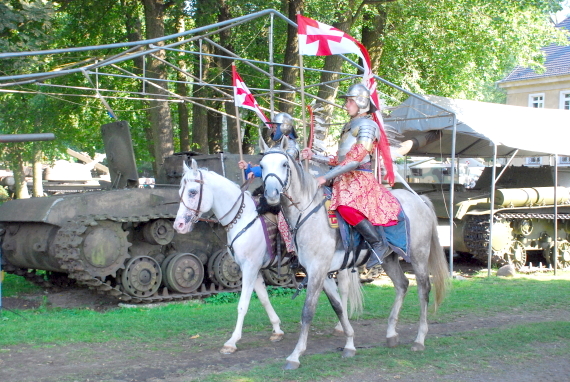
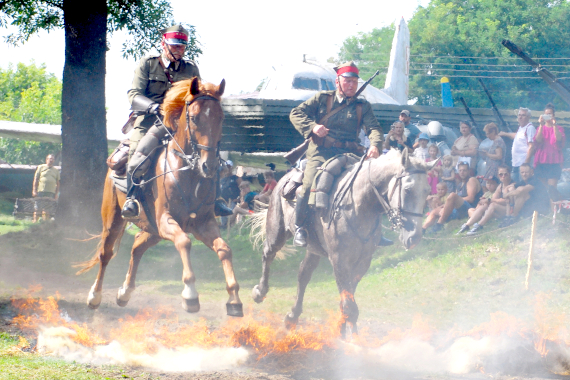
However, before these two flagship annual events appeared on the Lubuskie Military Museum’s calendar, the Knights’ Picnic was organised between 2015 and 2017. This initiative effectively combined the Children’s Day festival with the subsequent Tank Crew Day picnic into a single historical event. This highly engaging format allowed visitors to learn about the history of centuries past, brought to life by enthusiasts from various Knights’ Circles. The chance to watch knights fighting, and even to take part in the battles for the bravest of visitors, accompanied by an extremely witty and captivating commentary on the whole event, always elicited cries of admiration, joy and bursts of laughter from the crowd gathered at the display. The chance to don a suit of knight’s armour, or even just parts of it, and to try one’s hand at fencing with a sabre or a sword is an unforgettable experience, but it also gives a glimpse of what conditions were like back then and how difficult battles were several centuries ago.
On one occasion, we also managed to organise an event at the museum that was remarkable in its concept; its initiator and organiser on behalf of the Museum was Jarosław Sobociński. It was the Night of the Perseids, or the ‘Night of the Shooting Stars’. In collaboration with the ‘Venus Planetarium’, part of the Kepler Science Centre in Zielona Góra, late in the evening on 12 August 2017, thanks to a programme of various astronomical presentations, the audience were able to learn a great deal not only about the Perseids themselves, but also about space, stars, suns, planets and the Universe that surrounds us on all sides. The advantage of the presentation in Drzonów, as discussed by the astronomy experts, was its distance from the city and thus low light pollution, allowing for excellent observation of the sky through the telescopes brought from the planetarium. Good weather allowed for observations and presentations until 1.00 am on 13 August. An obstacle to organising subsequent editions was the astronomers’ concern about the very expensive and delicate equipment, which had to be transported from Zielona Góra over a considerable distance, along roads that were not always of good quality, which could have caused damage to the delicate optics of the telescopes. Despite this, the event was very well attended and highly rated by everyone who took part.
And finally, an interesting aside. For an event to be advertised and thus reach people, information about its organisation is needed. How has the way this information is communicated changed over the last 40 years, since LMW Drzonów first took shape?
In the context of what we now call marketing and advertising – that is, the communication of information – we can distinguish the era of photography (and within that, sub-eras: black-and-white, then colour, later digital – and this too is developing very dynamically, bearing little resemblance to its early days), the era of filming with handheld cameras, later with mobile phones, and now also using drones, which significantly broaden the perspective. The speed of information flow – and consequently of communication and publication – has also changed dramatically over the last few decades. In the early years of the Museum’s establishment, in order to publicise a new exhibition, one had to type an article on paper, send it by ordinary post via the traditional postal service (or deliver it in person) to the local press, and then wait for it to be approved by the editor and, if necessary, make the required corrections and changes to the text. Television coverage was then a rarity, reserved for the largest projects, but regionally, for events such as a museum exhibition, it was largely unavailable. What does it look like 40 years on? Videos and photos are available almost in real time; thousands of people can watch events taking place on the other side of the world with a delay measured not in minutes but in seconds! Today we cannot imagine the world or human interaction any other way, yet we are increasingly becoming aware of an information overload, the value and quality of which must be filtered, as the sheer volume has become too great for our senses to process. That is why, more and more often – perhaps out of nostalgia – we reach for an old photo album to look at a simple photograph from years gone by, beginning to appreciate its value.
This material was produced to mark the fast-approaching 40th anniversary of the official opening of the Lubuskie Military Museum.
Text and photos: Jarosław Sobociński