



Eighty years ago, the battleship ‘Bismarck’ sank to the bottom of the Atlantic – a symbol of the Nazi Kriegsmarine’s power and its pride. In May 1941, the Royal Navy committed all available forces to destroy this symbol. The task was a top priority – the aim was to take the German super-battleship out of service as quickly as possible before it inflicted losses on the Allies that would be difficult to recover from.
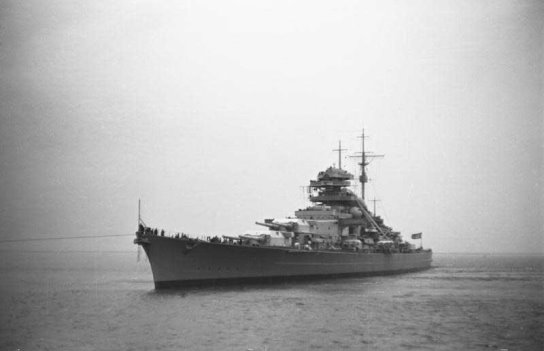
The Bismarck in the roadstead (Bundesarchiv – Bild 193-03-5-18)
In 1935, Great Britain and the Third Reich concluded a naval agreement setting a limit on the displacement of German combat vessels. This agreement overturned the restrictions imposed by the Treaty of Versailles and became the formal basis for the rapid quantitative and qualitative expansion of the German fleet. In time, two ‘magnificent’ ships were to appear in its first line – the ‘Bismarck’ and its sister ship the ‘Tirpitz’, which were to be the first in a series of ‘full-scale’ battleships for the rapidly expanding Kriegsmarine
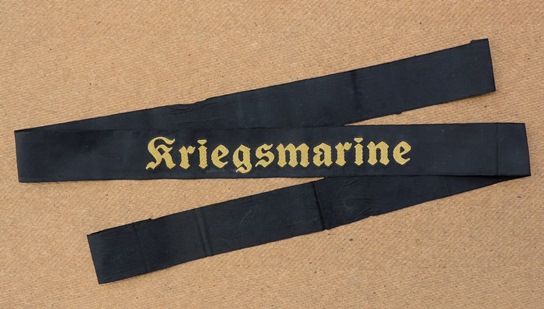
The history of the “Bismarck” began on 1 July 1936, when the keel was laid at the Blohm & Voss shipyard in Hamburg. The ship was launched on 14 February 1939. The battleship’s godmother was Dorothea von Loewenfeld – the granddaughter of Prince Otto von Bismarck. The ship’s construction cost almost 200 million Reichsmarks – enough to produce around 700 PzKpfw VI “Tiger” heavy tanks.
The battleship entered service in August 1940. Its commander was Commander Ernst Lindemann, who had begun his career just before the outbreak of the First World War – whilst still in the German Imperial Navy. The ship’s home port became Gdynia (Gotenhafen), where the battleship moored at the end of September 1940. The “Bismarck”, together with other large surface vessels such as the “Scharnhorst”, “Gneisenau” and “Tirpitz”, and the “Prinz Eugen” – was, according to the Kriegsmarine command’s plans, to tie down the Royal Navy’s main forces in the Atlantic. This would allow U-boats to attack and sink Allied convoys carrying food, raw materials and war matériel with virtual impunity.
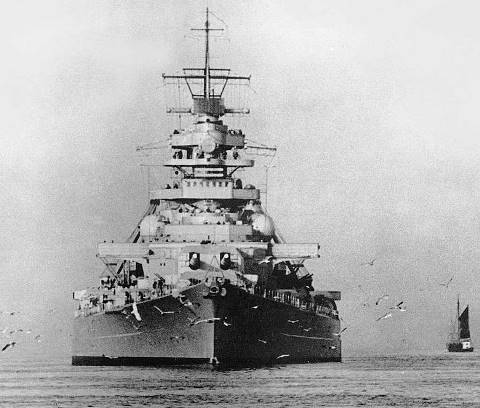
The Bismarck during a voyage on the Elbe, December 1940 (internet)
The Bismarck, exaggeratedly described by Goebbels’ propaganda as a ‘super-battleship’, was a vessel that should not, however, be underestimated. It was 251 metres long, 36 metres wide and had a maximum displacement of almost 51,000 tonnes. The side armour, up to 320 mm thick, was made of a new type of surface-hardened steel, KC/nA. The upper deck (forward) was 50 mm thick, and the main armoured deck 80 mm (90–120 mm at the slopes). The battleship’s main armament was grouped in four turrets, each housing two 380 mm SK C/34 guns of a very high standard. The turrets were arranged in a so-called superimposed configuration, i.e. along the ship’s centreline. The secondary armament consisted of twelve 150 mm guns, whilst the anti-aircraft armament comprised fifty guns and cannons ranging in calibre from 20 mm to 105 mm. Four Arado Ar 196 reconnaissance seaplanes were ‘parked’ in the hangars amidships. The ship could sail at a maximum speed of 30 knots, and its range was over 9,000 nautical miles at a speed of 16 knots. This entire complex surface structure was manned by 2,208 officers, petty officers and sailors.
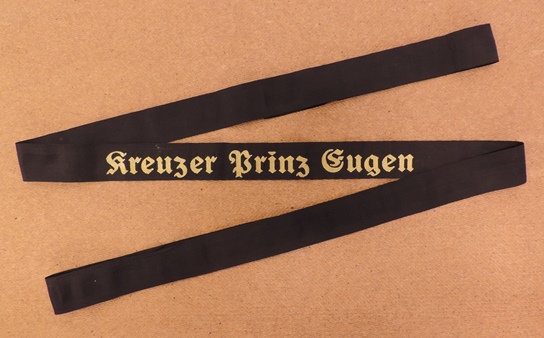
On 18 May 1941, the ‘Bismarck’, together with the heavy cruiser ‘Prinz Eugen’ and several escort destroyers, left the port of Gdynia on its first – and, as it later turned out, last – raiding mission. Operation ‘Rheinübung’ had begun. On 21 May, the ships reached the fjord at Bergen in Norway. During the stopover, they refuelled and changed their camouflage. However, the German force was quickly detected by British reconnaissance aircraft. Consequently, the force’s commander, Admiral Günter Lütjens, ordered an immediate departure to sea. On 22 May, the escort destroyers were sent back to their base in Trondheim, whilst the “Bismarck” and “Prinz Eugen” continued on their own. They were to reach the operational area via the Danish Strait between Iceland and Greenland.
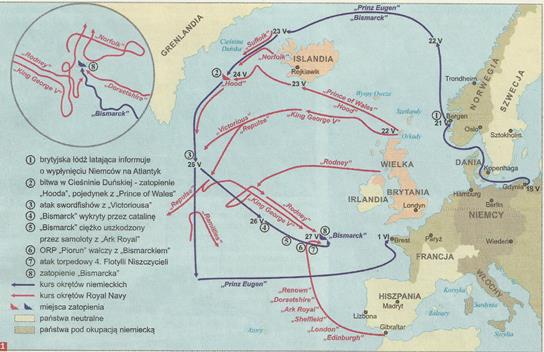
Operations in the Atlantic, 18 May–1 June 1941 (Rzeczpospolita. Naval Battles and Expeditions, No. 66, April 2011)
The first to make contact with the German ships were the British cruisers HMS Suffolk and HMS Norfolk, which were patrolling the strait. The “Bismarck” fired on the latter, but all the salvos were erratic and fell short; moreover, its radar failed, forcing the “Prinz Eugen” to take over as the lead ship of the formation. The British cruisers were soon reinforced by Vice-Admiral Lancelot E. Holland’s task force, comprising the battleship HMS Prince of Wales, the battlecruiser HMS Hood and six destroyers. On the morning of 24 May, a barrage from all heavy guns commenced. The “Hood” mistakenly fired on the heavy cruiser “Prinz Eugen”, whilst the “Prince of Wales” correctly targeted the “Bismarck”. At one point, both German ships, from a distance of 20,000 metres, concentrated their fire on the British flagship. After a few minutes, the fifth salvo from the “Bismarck” struck the hull of the “Hood”. One of the shells hit the ammunition magazine between the second funnel and the mast. A massive explosion caused the pride of the Royal Navy to sink in an instant. 1,418 sailors lost their lives, including four Polish cadets undergoing training on the ship. Only three people were rescued! The Germans then turned their attention to the battleship “Prince of Wales”, which, after being hit by several 380 mm and 203 mm shells, withdrew from the battle under cover of a smoke screen.
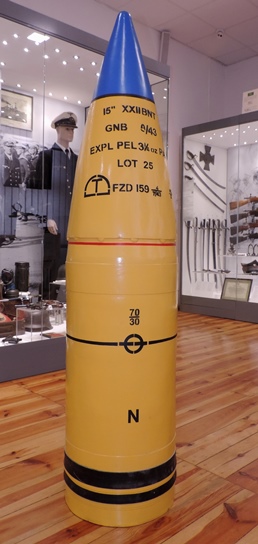
A 1:1 scale model of the 65-inch (1651 mm) long, 15-inch (381 mm) calibre APC Mark XXII anti-tank projectile used by the main battery of the battlecruiser HMS Hood. The shells were used in the 100-tonne Mk I naval gun (in service with the Royal Navy from 1915 to 1959). The shells weighed 879 kg, were fired at a muzzle velocity of approximately 800 m/s and had a rate of fire of 2 rounds per minute. The model was made by Marek Woźniak.
The loss of the ‘Hood’ and the death of Vice-Admiral Holland led the Admiralty to make it a point of honour to avenge this defeat and destroy the ‘Bismarck’ at any cost. The task was made somewhat easier by the fact that the German battleship had sustained serious damage in its clash with the ‘Prince of Wales’. Hits from British 356 mm shells caused the ship to take on water, causing it to list to the bow and lose a significant amount of speed. The most serious damage turned out to be to the forward fuel tank, resulting in huge quantities of oil leaking into the ocean. In this situation, Admiral Lütjens, commanding the German fleet, abandoned the mission entrusted to him. He ordered the heavy cruiser “Prinz Eugen” to conduct independent operations in the Atlantic (after a week-long voyage, it safely reached the port of Brest in France), whilst the “Bismarck” set course for the port of Saint-Nazaire, which had a dry dock large enough to carry out the necessary repairs.
Meanwhile, the British launched a swift and fairly effective counterattack. Closest to the German ships was the task force of Admiral John C. Tovey – commander of the Home Fleet – consisting of the battleships HMS King George V and HMS Repulse, four cruisers, seven destroyers and the aircraft carrier HMS Victorious. It was from its deck that, late in the evening of 24 May, nine torpedo bombers were sent into battle against the German battleship. Poor weather conditions and the inexperience of the pilots meant that only one torpedo hit its target. As a result, a decision was made to reduce the ship’s maximum speed once again to just 16 knots. The Germans, however, were aided by the terrible weather, which made it easier for them to escape from the British vessels in pursuit. At dawn on 25 May, the ‘Bismarck’ vanished into stormy weather. In accordance with its escape plan, the ship made a wide turn, then set course for the French coast. The Royal Navy, however, refused to give up, tightening the noose around the battleship ever more. A fast task force, including the aircraft carrier HMS Ark Royal, set sail from Gibraltar to join the massive hunt for the German warship. The fleeing vessel was spotted on the morning of 26 May by the Canadian crew of the Catalina flying boat. Later that same day, several destroyers – including the Polish ORP “Piorun” – were brought into the fray. The “Bismarck” once again disappeared from the radars tracking it, but at around 9.00 pm it was located by a second wave of British aircraft from the aircraft carrier HMS “Ark Royal”. A torpedo attack followed, resulting in damage and the rudder becoming jammed. A sudden change in the battleship’s course meant it was lost again. An hour later, it was spotted by ORP “Piorun”, which maintained visual contact with it for four quarters of an hour, and subsequently contact by radar alone. The following morning, the battleships HMS “King George V” and HMS “Rodney” approached the “Bismarck” – the only vessels capable of engaging it in a fight on equal terms.
The final act of the drama unfolded in the early hours of 27 May 1941. The German battleship was listing to port, was unsteerable, and the maximum speed it could achieve did not exceed 7 knots. Instead of heading for the French coast, it sailed in the opposite direction – straight into the guns of the British, who began firing at it at around 9:00 am. Huge 406 mm and 356 mm shells struck the forward superstructure, damaging both forward turrets and destroying the command and fire control stations. Only the Bismarck’s aft turrets were firing, but they too soon fell silent. Two heavy cruisers, HMS Norfolk and HMS Dorsetshire, joined in to ‘finish off’ the German battleship. The relentless close-range bombardment, lasting over an hour, demolished the upper deck of the ship, which was engulfed in flames; now practically a wreck, it ceased firing. After 10.00, the British battleships ceased fire on the “Bismarck”, which was still afloat, and the cruiser HMS “Dorsetshire” was ordered to finish it off. Three torpedoes were fired – the last one, which struck the port side, proved decisive. At around 10.40 am, the battleship capsized and sank, taking 2,092 crew members to their deaths, including Admiral Lütjens and Commander Lindemann. Only 116 people survived the sinking of the pride of the Kriegsmarine, having been rescued from the water by British and German vessels.
The wreck of the ‘Bismarck’ lies at a depth of 4,750 metres, some 400 nautical miles off the coast of France. It was discovered in June 1989 by an expedition led by Dr Robert Ballard – a renowned American oceanographer, underwater archaeologist and wreck hunter. The “Bismarck” settled squarely on its keel, which means that as it sank, the battleship made another turn and remained in this position. As the ship sank, the four main gun turrets (the forward ‘Anton’ and ‘Bruno’, and the aft ‘Cäsar’ and ‘Dora’) broke away from the hull, as they were held in place only by their own weight. They lie nearby, embedded upside down in the seabed. The broken mainmast, rangefinders and many other components also lie nearby. For a ship that has spent several decades in seawater, the battleship’s wreck is in very good condition and still ‘makes an impression’.
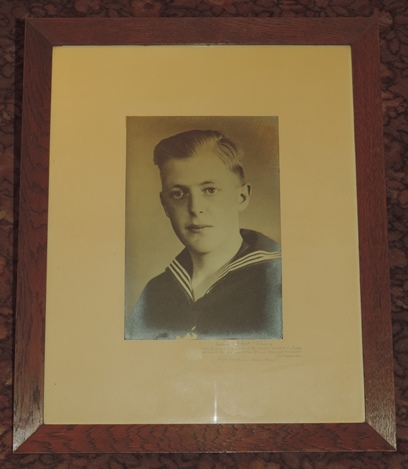
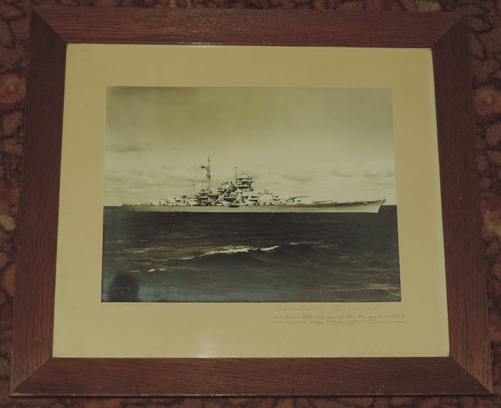
The collection of the Lubuskie Military Museum in Drzonów includes artefacts indirectly linked to the most famous German battleship. They were acquired from a private individual in February 2000. They consist of two photographs mounted on cardboard backing, under glass, and framed in sturdy wooden frames. The original mounting was probably made around the turn of 1941 and 1942. The first photograph, measuring 300 mm x 205 mm, shows a young man in a sailor’s jacket with a turned-down collar featuring three white stripes and a tie. Below the photograph, a member of the man’s family (mother?, father?, sibling?) wrote the following text in pencil in old German script (Kurrent): Sailor Eduard Kumm. Our beloved son, brother, brother-in-law and grandson. Born 14 October 1921, fell on 27 May 1941 on the battleship ‘Bismarck’. Rest in peace in the depths of the sea. The second photograph, measuring 295 mm x 225 mm, shows the battleship ‘Bismarck’ in all its glory, probably in the waters of the Kiel Bay. It does not yet have the bow radar or the main radar installed. It is possible, however, that these were deliberately retouched by the censors. The photograph is signed Wilh. Schäffer Kiel (Wilhelm Schäffer 1872–1948 – a well-known maritime photographer from Kiel). The following text is written in cursive beneath the photograph: The battleship ‘Bismarck’. Along with the ship flying its flag, sunk by the enemy on 27 May 1941, the sailor Eduard Kumm rests at the bottom of the sea.
Text and photographs: Tadeusz Blachura. Translated from German by Agnieszka Mościpan